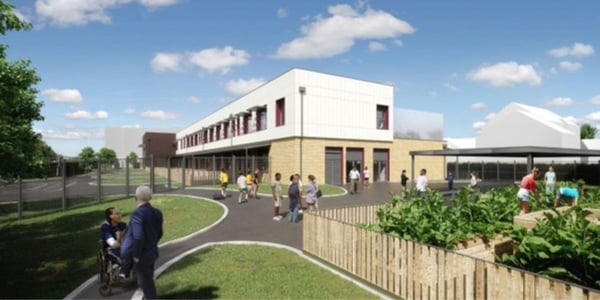
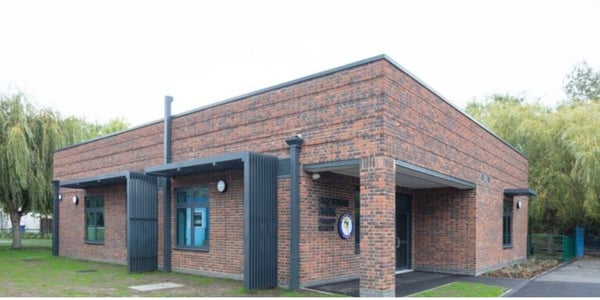
Three specialist education needs (SEN) projects for the London Borough of Brent Council have been...
New guidance will see buildings designed with SEND pupils in mind
.jpg?width=1200&height=600&name=Sensory%20room%20(1).jpg) Design for an inclusive sensory room. Credit: Tigerplay
Design for an inclusive sensory room. Credit: Tigerplay
Inclusive Estates sets out a roadmap for how nurseries, schools and colleges can adapt buildings to better cater for children with SEND.
The Inclusive Estates guidance suggests tools for understanding the daily experience of a child with SEND, such as structured walkthroughs or “Day in the Life” approaches to identify challenges in navigating the physical space. It includes tangible improvements including adapting acoustics and light, introducing quiet and calm spaces like sensory gardens or installing ramps or handrails.
For the first time, Inclusive Estates sets out what families can expect to see on the ground, building on the commitment that every secondary school will, in time, have an inclusion base – a dedicated area providing targeted teaching and specialist support for children with SEND.
Inclusion bases will be run by a qualified teacher, never used as a sanction, and will enable access to an adapted, broad and ambitious curriculum, serving as a bridge to school life rather than a barrier to it.
The bases go hand in hand with an overhaul of physical spaces including classrooms, with landmark guidance for schools, early years and post-16 settings laying out a roadmap for how buildings can be adapted around the real experience of a child or young person with SEND.
Schools, early years settings and colleges in every area of the country will also shortly receive their share of the Inclusive Mainstream Fund, with over £500 million allocated this year to support settings to invest in high-quality adaptive teaching, inclusive whole-school approaches and evidence-based support.
Annamarie Hassall, chief executive of the National Association for Special Educational Needs (nasen), said: “Importantly, the guidance has been developed with the sector, for the sector, and includes examples of current practice set out as six principles along with clearer, shared language.”
.jpg?width=600&name=Girl%20writing%20(1).jpg)